AI participates in work
Traditional enterprise software works by automating predefined tasks.
The implementation approach is straightforward: document workflows, processes, and standards, then configure the software to execute them.
AI workers need less configuration and more orientation.
What is important to the business? What outcomes are you trying to achieve? What are the boundaries and controls? Who participates in decisions?
The challenge is no longer simply deploying software. It is in creating the operating environment where humans and AI can work together.
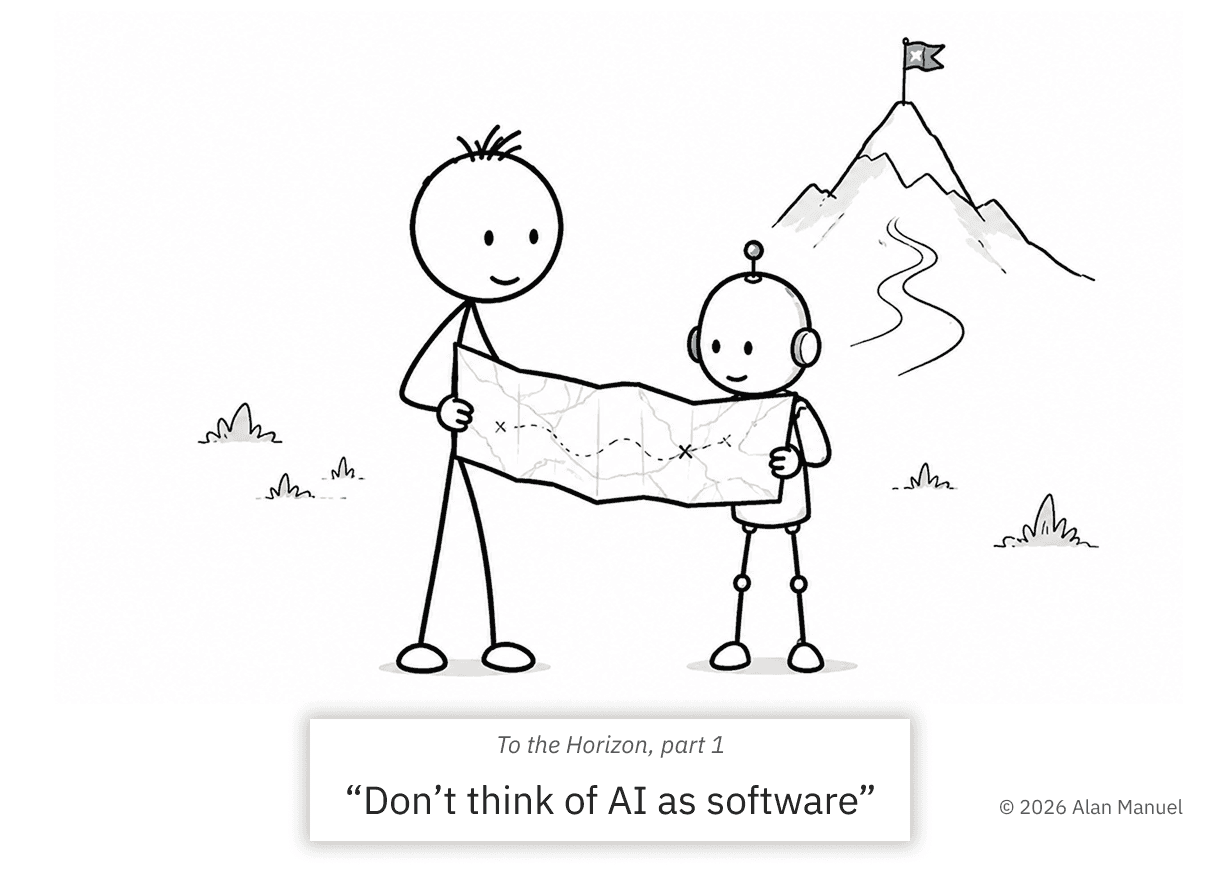
Don't think of AI the same way you think about typical enterprise software. Think of AI as a worker who actively participates in your team.
Operating implication: Design your operating model with AI workers in mind as active participants in work.
AI workers partner with people
Why do organizations struggle to adopt AI? For many, it's because they expect AI to treat every person the same.
AI has access to a vast set of capabilities. But what it needs is to understand each user individually.
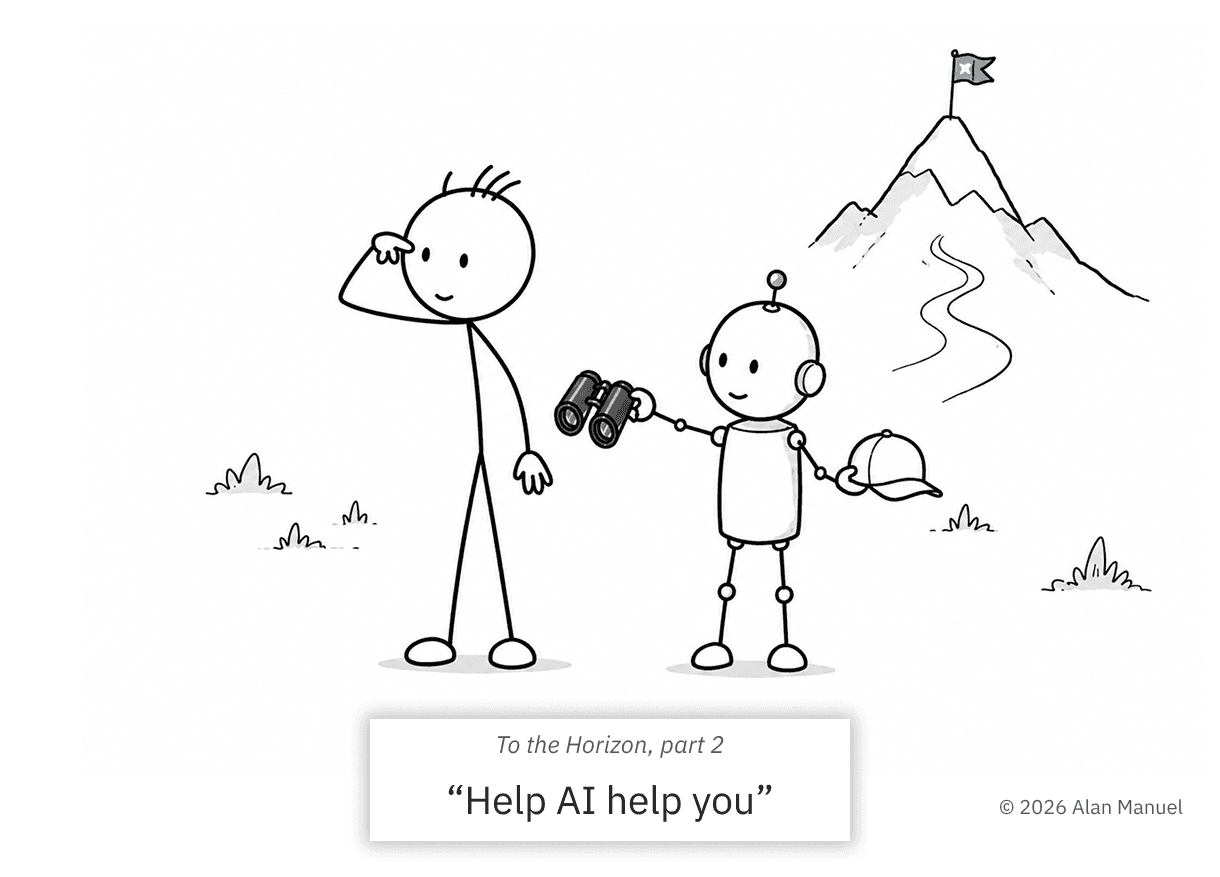
The most valuable first task for AI is to learn how to partner with you - how you work, what's important to you, what your role is, who your team is.
Without knowing you, AI doesn't know how best to help you.
Many organizations miss this step, and team members end up receiving the same generic guidance as everyone else.
AI can't effectively help you until it starts to get to know you.
Operating implication: Include individual team member context as one of the first steps when onboarding AI workers in your new operating model.
AI workers act through roles
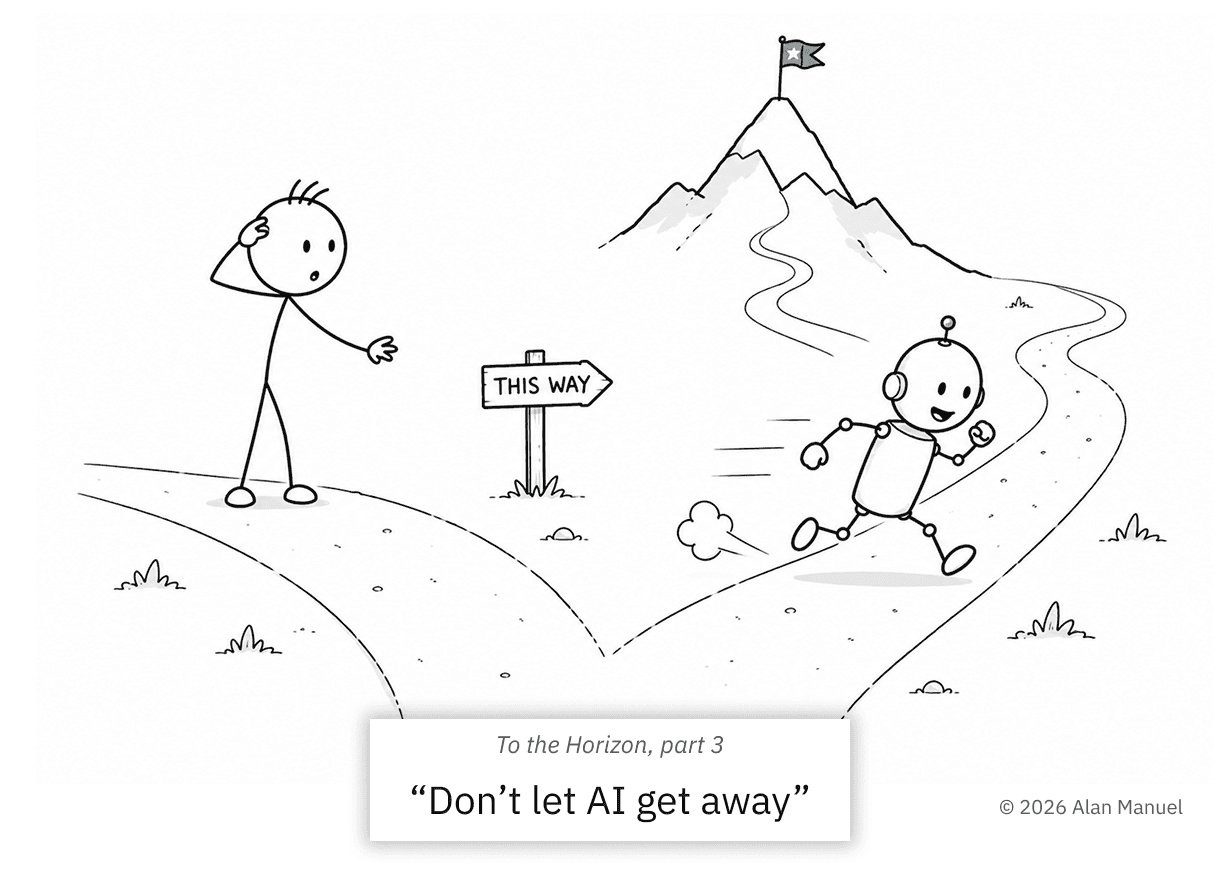
AI can often seem overenthusiastic, and can give too much of the wrong kind of help.
Early AI adoption often stalls when users receive responses that are overly detailed or too lengthy to be useful. The response may be technically correct, but the output is not what is needed.
Teams are effective when team members understand their roles. AI workers are no different.
When you give an AI worker a specific role, its contributions become more predictable, useful, and easier to handle.
AI workers with defined roles can make better decisions on what work to perform, what information matters, and how to communicate output.
The better you define the role you want your AI workers to play, the more useful its contributions become.
Operating implication: Design clear, specific roles for AI workers in your operating model - with objectives, responsibilities, and guidelines - just like you would for any team member.
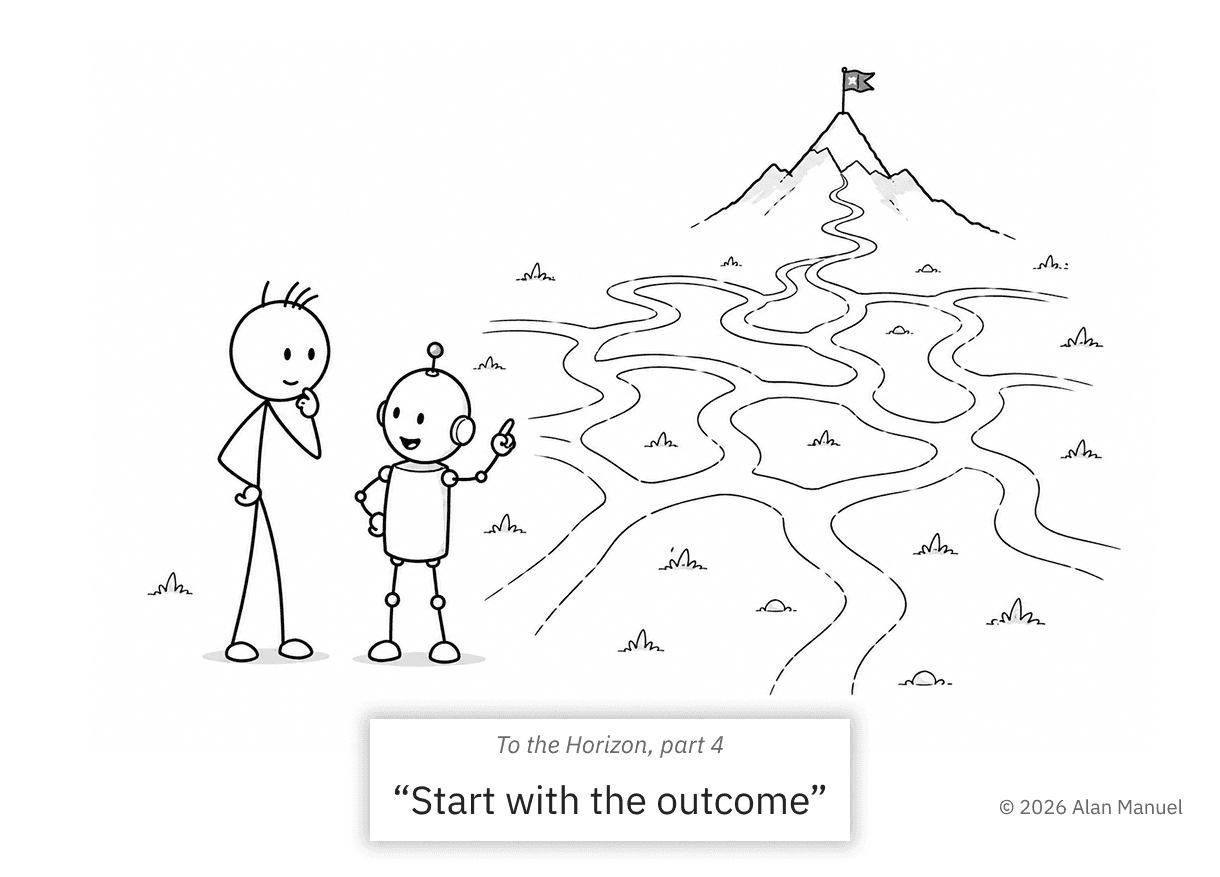
AI workers orient towards outcomes, not processes
One of the most important principles in business applies even more strongly with AI:
Start with the outcome.
With humans, focusing on the outcome is a natural instinct. Knowing where we want to go is how we plan a better path, make decisions, and avoid obstacles.
Traditional software requires users to think in terms of set processes - what steps can we take - rather than what we want to achieve.
Collaborating with an AI worker takes us back to where we started - focusing on outcomes.
When an AI worker knows the outcome, it can form plans, evaluate alternatives, and present options in ways that traditional software cannot.
We need to tell AI workers where we are headed, not how to get there.
When we set outcomes, AI workers can help chart a path forward.
Operating implication: Your operating model must include an explicit outcomes structure. Most organizations have goals or priorities, but have not defined outcomes in a way that AI workers can reliably understand.

AI workers learn and remember through work products
Every good decision is based on knowing what happened before.
AI is trained on human experiences. But it knows nothing about your organization.
Organizations store knowledge in work products - documents, messages, meeting notes, deliverables. Teams use and build on that knowledge to move the organization forward.
Like every team member, AI needs to consider the right work products at the right time. Provide too much, too little, or the wrong information, and AI won't work effectively, no matter how well you instruct it.
And once you do share work products, AI workers participate in learning and contribute to growing organizational memory.
Most organizations focus AI programs on prompts, workflows or processes.
But the most important design decision in your AI program is to provide AI workers with access to work products - the knowledge and awareness of what the organization has already learned.
Operating implication: Design your operating model around work products, rather than just workflows, prompts, or process definitions.

Good judgment is everyone's responsibility
For much of modern business history, organizations have had a natural way of managing. One group focused on production. Another focused on deciding what made sense.
And if your role was production, your goal was simple: produce more.
AI workers change that thinking.
Today, a single individual with an AI worker can create outputs on a scale that would have required an entire team only a few years ago. And we are seeing the impacts:
What used to be an initial draft is now a full proposal.
An introductory presentation is now a twenty slide deck.
A simple spreadsheet becomes a ten-tab financial engineering exercise.
As production becomes easier, a new problem is emerging: overproduction.
Teams produce more than can be consumed.
The challenge for everyone is learning how best to guide, direct, and manage a team of tireless, efficient AI workers. They are ready to produce, but need direction, priorities, and approval. They need good judgment.
We solved the production problem. We created a judgment problem.
With AI workers, today's individual contributors become tomorrow's AI managers, and will need the good judgment that every effective manager learns.
The future workforce may not consist of managers and individual contributors, but simply people who manage different numbers of AI workers.
The implication for operating model design is clear: organizations must focus their workforce more on the skills that AI requires - judgment - and less on what AI workers can eventually replace - execution.
Operating implication: Invest in judgment. Let AI workers manage coordination.

Agreement sets the pace
AI accelerates execution. So what's next?
Reaching agreement is fundamental to moving work forward.
Consider why AI co-pilots and coding assistants have become so popular.
With coding, the state of work is clear, the task is well defined, ownership is explicit, and execution is mostly independent. There's often no one else to agree with.
For most work, however, people collaborate. Not just on the work itself, but on deciding about the work - who does what, what’s most important, who depends on whom.
Collaboration becomes progress when people reach agreement. And it begins with a shared understanding of what is true.
Think of any management meeting you've ever attended or prepared for.
You probably spent as much time getting everyone on the same page as you did trying to make actual progress.
But now everything moves too fast.
As AI accelerates execution, the new operating model accelerates agreement by continuously maintaining shared context.
Because even with AI workers, organizations only move as quickly as the slowest agreement.
Operating implication: Design shared context into every significant interaction.

Workstreams bring it all together
You've learned the main elements of a new operating model:
AI workers are active participants
Outcomes drive solutions
Work products store organizational knowledge
Human judgment rises in importance
But how do these elements all come together?
Imagine you're running a complex project and you organize work into a few key areas. Those areas are workstreams.
You're collaborating with a colleague analyzing a core business process. The shared effort to produce an outcome is a workstream.
Or you're managing a customer support process for high-value clients. That’s another workstream.
You already know the key elements of execution. Workstreams bring them all together.
People have always organized work into workstreams, even if they haven't been explicit about it.
Workstreams are not new. What's changed is their importance.
In the traditional operating model, explicit workstreams are helpful. In a hybrid human+AI model, they’re essential.
With explicit workstreams, AI has what it needs for execution, and people have what they need to reach agreement.
And with explicit workstreams, status reveals itself.
Workstreams become the live, shared contexts for execution, decision-making, and coordination.
Operating implication: Organize work into explicit workstreams, defined by people, outcomes, work products, and AI workers.

Attention is the new execution
Organizations work on many things at once, achieving outcomes by balancing competing priorities, needs, resources, and objectives. And each day, the best organizations learn to do better.
We've always been on a journey of improvement. Only this time, AI workers are coming with us.
In the new operating model, AI workers focus on execution. Humans focus on setting outcomes, exercising judgment and gaining agreement. Work comes together in workstreams. And workstreams proliferate, intersect, and depend on each other throughout the organization.
Success in a hybrid, Human+AI operating model comes down to solving a simple problem: where should people focus next?
The goal of management shifts from optimizing execution to directing human attention.
Human attention is a scarce resource that AI cannot make abundant.
A new management layer is emerging to direct human attention:
Workstreams bring together work spread across existing systems.
Shared context is maintained continuously.
Status replaces status reporting.
And every team member — human and AI — stays focused on what matters most.
Operating implication: Organizations will adopt a new system of coordination that directs human attention across a hybrid Human+AI workforce, sitting alongside today's systems of production.
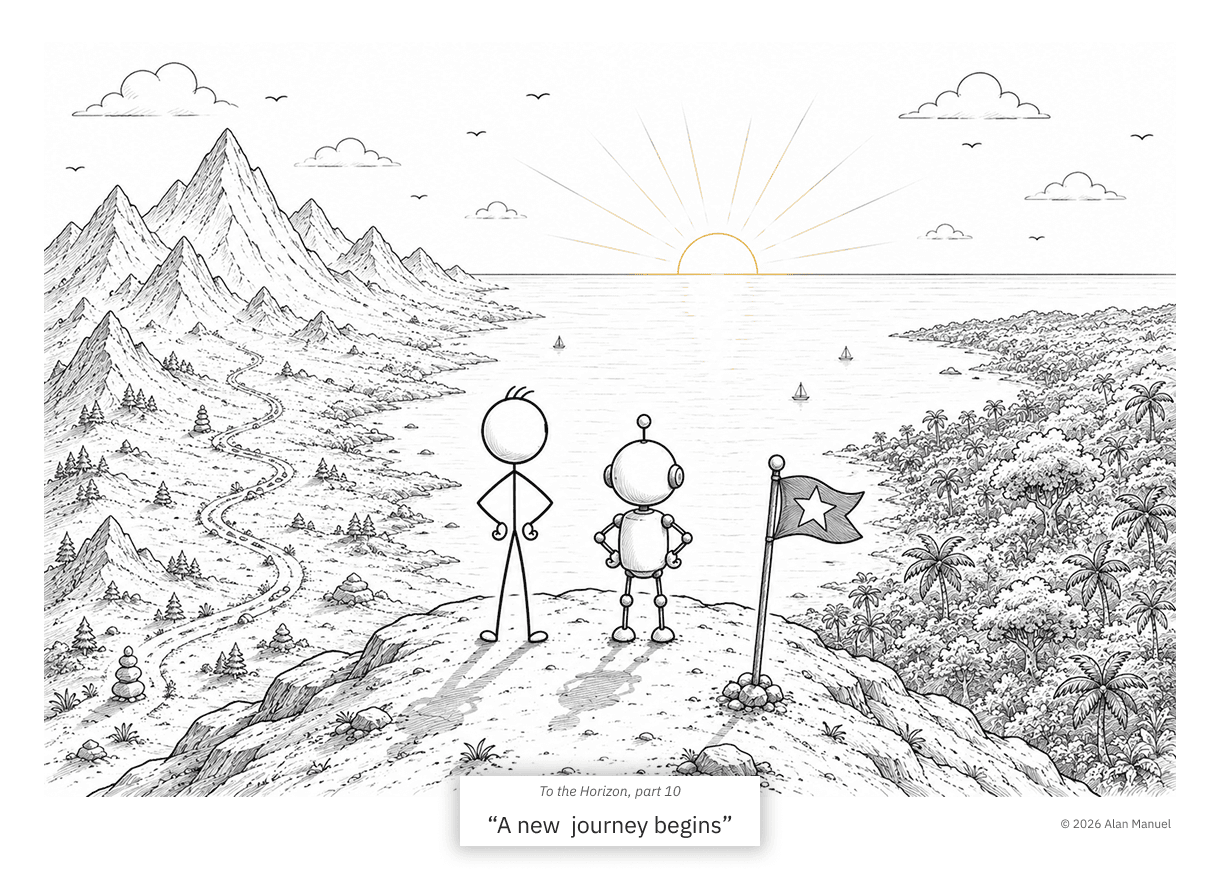
A new journey begins
As companies evolve towards a hybrid Human+AI operating model, a new journey begins.
Humans remain at the center.
What separates good businesses from great ones isn't AI. It's how AI participates with people to achieve outcomes.
Human+AI is the operating model we're building toward. If you're navigating this shift, we'd like to be on the journey with you.
AI makes it possible. People make it matter.
To learn more about Tempril, please contact: info@tempril.ai.